| Photo of the Month September 2026 |
|||||
| See Previous Photos Unknown Faces and Places |
 |
| Courtesy Salem University |
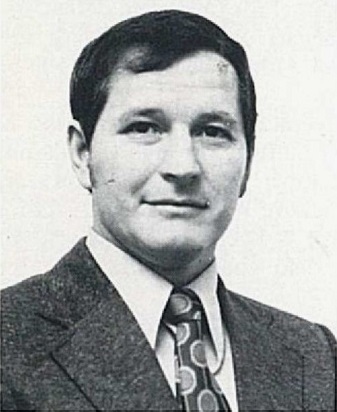
A native of Uniontown, PA, Harry E. Hartman went on to graduate in 1962 from Salem (WV) College, where he built his life and lengthy career. Harry captained the football team for two years and was elected to the First-Team All-West Virginia Intercollegiate Athletic Conference Football Team in 1960 and 1961. He then received his masters degree from West Virginia University in physical and safety education and attended the University of Cincinnati.
Harry returned to his alma mater Salem in 1973 and stayed for good. He initially was tapped to chair the physical education department and then in 1978 was promoted to vice chair of faculty. He served as offensive coordinator for the football team from 1965 to 1976, including in 1975 when the squad played in the National Association of Intercollegiate Athletics Division I championship game. He also took on the post as dean of men for the Clarksburg campus in 1967 as well as director of commencement in 1974.
His other Salem accomplishments over the years have been memberships on the Analytic Studies Team, Long Range Planning Team and President’s Evaluation Committee. Harry was inducted into the all-time WVIAC football team in 1975 and at one time was NAIA District 28’s faculty advisor. Said the college, "During his successful career at Salem College, Hartman developed an "Awards System" for outstanding Salem College athletes; the Physical Education Advisory Committee; the Physical Education Departmental Library; the Athletic Alumni Club; an evaluation system for the Physical Education department; a graduate program in physical education, safety, health and coaching; and annually assisted the athletic department in fundraising campaigns."
In 2018, the Harry Hartman Fitness Center was dedicated in the campus's T. Edward Davis Gymnasium, and the Clarksburg Exponent-Telegraph called him "one of Salem’s most influential leaders of young men and women -- both in athletics and in academics."
He is the son of Douglas David and Elizabeth (Campbell/France) Hartman Sr. of the family of Thomas and Adaline (Shaulis) Ream Jr. of Ursina, PA.
 |
|
Copyright © 2026 Mark A. Miner |